Giving Dogs Choice
Thoughts on creating opportunities for agency in dogs

Imagine a life with almost no choice. You don’t get to choose what you eat or when you eat it. You don’t get to choose where you go or what you do when you go there. You don’t decide when you go outside. When you do get to go outside, you don’t get to choose how much you move or which direction you move in… or when you go back inside. You can’t choose who you say hi to (or if they’re allowed to smack you on the head when they say hi). And then imagine that there’s one person, or a couple of people, who get to make all of these choices for you.
It’s kind of a scary scenario, right? A lot of us got a glimpse into this reality when we were kids and adolescents. Do you remember how frustrating it could be? And how empowering it could be to get a little taste of freedom and choice? Do you remember how badly you wanted some things and how much you appreciated it when you were given autonomy and access to those things?
This is daily life for most dogs. And they don’t get to grow out of it. As their caretakers and friends, don’t we owe it to them to try to find ways to help them express their opinions and have some power of choice? As parents, giving appropriate choice and freedom can go a long way towards fostering a happy, fulfilled individual. Isn’t the same thing true for dog handlers and their dogs?
And if having some choice and control does indeed benefit all of us, then how can we work this into the daily lives of our dogs in a way that supports their training? I think a lot of people actually do consider this. People love their dogs and they want them to communicate. I have mixed feelings on the whole speech button trend, but I think one of the reasons they are such a hot item is that people are actually looking for a way to give their dogs some choice in life, which is an admirable thing.
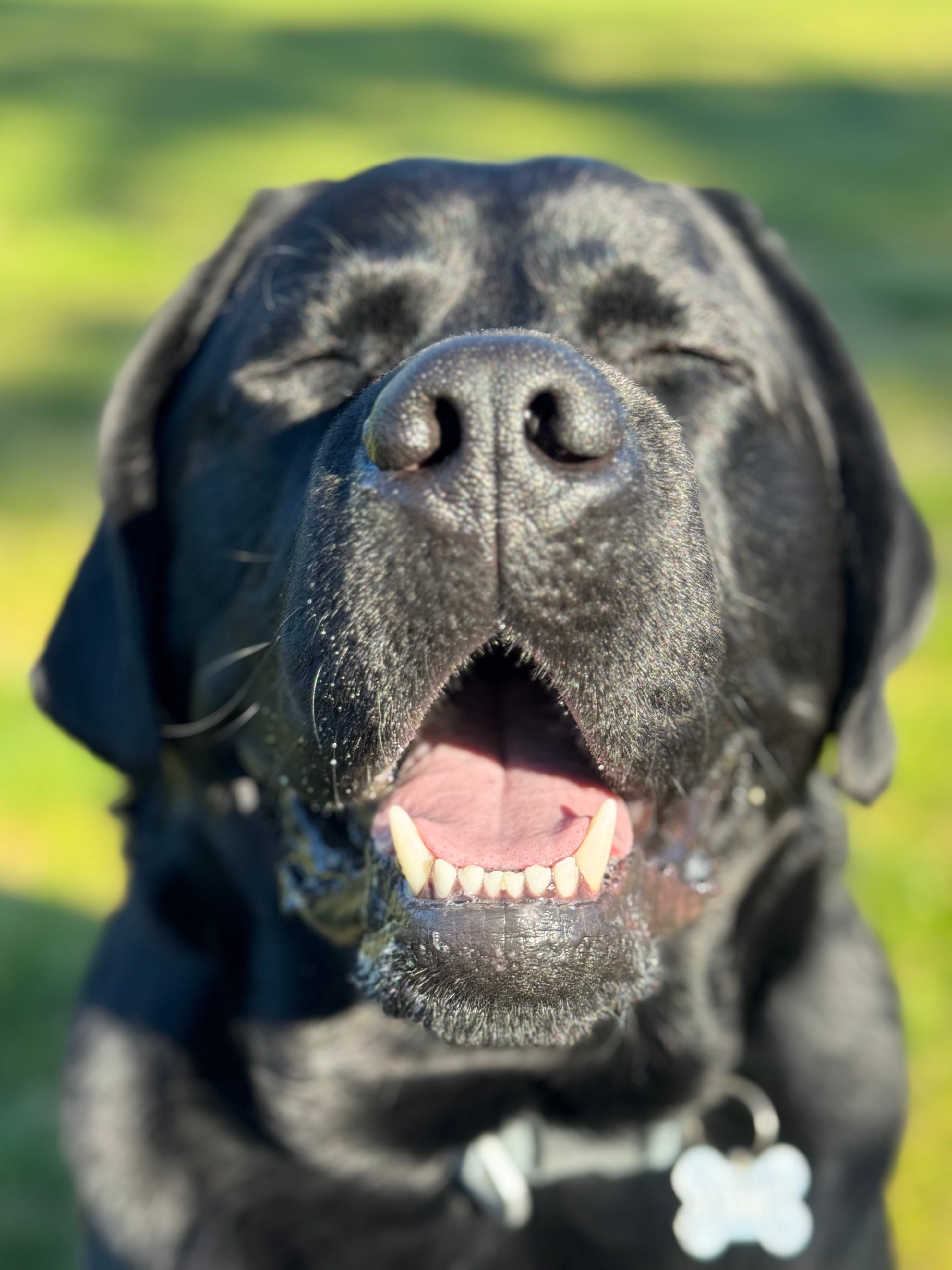
I think about this a lot with my own Labrador pup, James, who is right in the thick of adolescence, where he has a strong desire for choice and autonomy, and also regularly demonstrates that too much choice and autonomy is not always a good thing. But I’m trying to create opportunities for him to be able to make choices, and I can see how it helps him. Here’s what I am doing, and I would love to hear what some of you are doing as well!
“Look at me, then sniff.”
This one is pretty simple. There are so many things out there that dogs want to check out, mostly by sniffing them. We can give them a simple way to unlock access to those things in the form of eye contact. So if James finds some new discovery that he thinks is absolutely incredible (usually another dog’s pee), I stop, wait until he looks up at me, then give him permission to go check it out. He feels less frustrated because he gets to make choices, and he can show me what he wants to check out without using pulling to get there.
“Move away with me, then sniff.”
Lately, we’ve discovered a great way to counter frustration on walks by promoting the idea that if the leash gets tight, James has to come back to me and move away from the thing he wants to access, but then we get to move there excitedly together. It has helped us so much! Just like eye contact, now he feels like he has a way to unlock the thing he wants to access. It’s cut down on his frustration (and mine) immensely. We sometimes have to repeat this a few times on the way towards the cool thing he wants to check out. But he’s getting pretty good at it, and he almost sees it like a little game at this point. And it’s helping him do less pulling in general because he knows we have to get places together.
“Follow a cue, then sniff.”
I sometimes worry about creating a behavioral chain where James’s experience is “okay, so if I look at you, then pull towards the thing I want, then come back to you, I get to check out the thing right?” One way I’m trying to counter this (especially if he makes an error and tugs me) is by stopping, asking for a behavior (like a sit, down, or hand touch), then giving him permission to go sniff the thing. That way, even if we were starting to create a chain, we interrupt it and use the access to reward the behavior. Just like eye contact or coming back to me, the idea is “you do something for me, then I do something for you”.
“Choose your route”
This one is almost exactly like the previous three, except instead of going to sniff or check something out, I’m letting James have some say in which route we go on our walks. I mostly do this by asking for eye contact or a hand touch. So if he indicates that he wants to go a certain way (ideally before the leash gets tight), I wait for eye contact or ask for a touch, then tell him “okay, let’s go that way!”. Sometimes I’ll ask him first “do you want to try it?” and then he knows the game is on.
“Substitute rewards”
This is crucial because as much as we may want to give our dogs some choice and freedom, there are things that we just can’t let them check out (like that chicken bone, strange baggy with white powder, or dead rat). If we are teaching our dogs that they have some choice, then we have to provide an alternative reward when they are not allowed to check things out. This can be food, play, movement, praise, or anything else that the dog likes… and they have to like it a lot because it’s hard to compete with a chicken bone!).
I would love to hear about what some of you are doing to give your dogs some agency in their lives. I have a feeling some trainers will think this whole concept is silly. And I think we do have to be careful with choice because it can easily lead to more frustration or confusion in the dog. Clarity is important. But I think there are creative ways for us to let them make more choices, and I think they genuinely feel happy when they get some say in life :)
.
Oh my goodness, James! You are getting cuter everyday 🤩
I have been giving Charlie choices throughout his day. First thing out the door he gets to choose which way he wants to go on our walks. Somehow we have learned, "left, straight, or right" and he will pick which way he’d like to go at different crossroads. We have a lot of alleys around our little town and he usually varies the walk each day. However, after reading your post I may be giving Charlie too much agency so I’ll look at ways to adjust that, possibly making it more a give and take relationship? He does consistently surprise me with how intelligent and intuitive he is. He can select which bowl he would like his meals in, if he would like warm water on his food or if he’d prefer it dry. I’ve noticed a change in his behavior since we have been doing this. He is more invested in life, our relationship has become closer, and I get the feeling he feels he is being listened to and he gets to make choices throughout our days. I appreciate your articles, John. They always provide guidance and clear cut ways of how to get from A to Z and I need that. Thank you!